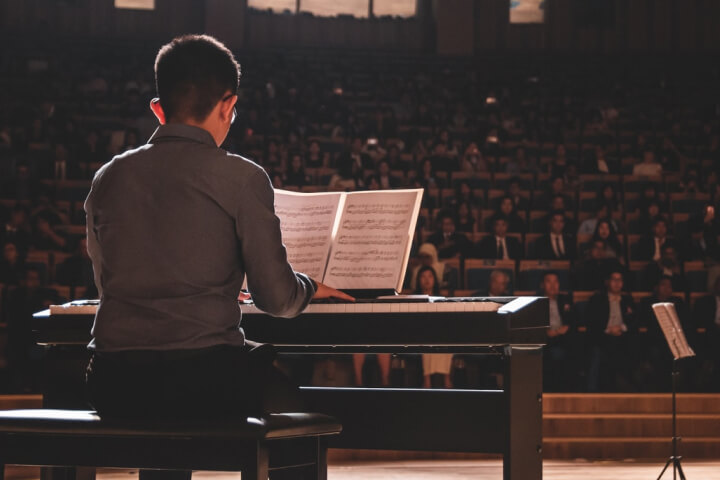
A concerto is a large-scale musical composition that features a solo instrument contrasted against an orchestra. It’s built on the interplay between the individual and the ensemble, creating drama, dialogue, and virtuosity.
Think of a concerto as a musical drama between one voice and many—the soloist shines, but the orchestra gives context, depth, and grandeur.
- Concertos are showpieces for virtuosity, often written to highlight a performer’s skill.
- They embody a musical dialogue: the soloist versus the orchestra, sometimes in conflict, sometimes in harmony.
- Many concertos are cornerstones of concert repertoire, beloved by audiences worldwide.
Form is similar to Sonatas where the first movement has the theme intro > development > recap. It’s called a “double” exposition because the orchestra presents the theme, the soloist also presents their version. Then, a “Cadenza” is also added (usually after the development and before the recap) where the soloist improvises on the theme and plays a mini solo without the orchestra to show their talent. At this time, most of the best cadenzas have been written down and learned; it’s been a very long time since I’ve heard a brand new cadenza unknown or newly created.
I chose Schumann’s piano concerto at the button below for listening because it includes my favorite cadenza. I also love the Chopin piano concertos. (I’ll create a concerto playlist when I have some time and share with you.)