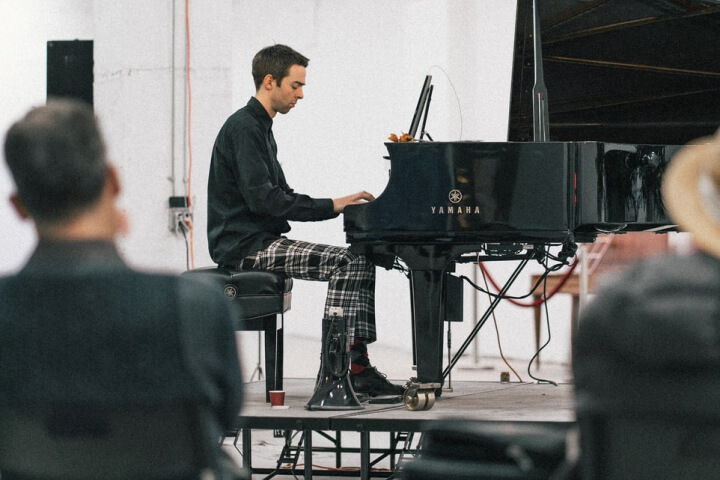
Performance transforms practice into purpose and helps students connect emotionally with their music and audience. If we look at our community recital through this lens, then we see that a piano recital for young kids is a joyful celebration of growth, courage, and creativity. It’s less about perfection and more about planting seeds of confidence and musical expression.
What is Performance?
Piano performance is literally just a conversation between the pianist and the audience where emotion, technique and imagination converge. Performing builds confidence, deepens musical skills, and fosters personal growth.
🎹 Why Piano Recitals Matter for Students
- Boost Confidence and Stage Presence
Performing in front of others helps students overcome nerves and develop poise. Each recital is a chance to step into the spotlight, building self-assurance that carries into other areas of life. - Strengthen Musical Memory and Expression
Preparing for a recital encourages memorization and interpretation. Students learn to internalize music, focus on phrasing, and communicate emotion through sound. - Encourage Discipline and Motivation
A recital sets a clear goal. Students become more focused, practice consistently, and strive to polish their pieces. This structure nurtures time management and perseverance. - Celebrate Progress and Achievement
Recitals mark milestones in a student’s journey. Applause and recognition validate their hard work, creating a sense of accomplishment and pride. - Foster Community and Connection
Sharing music with peers, teachers, and family builds a supportive environment. Students feel part of a musical community, learning from others and celebrating together. - Develop Performance Skills for Life
Beyond music, recitals teach public speaking, emotional communication, and resilience. These skills benefit students in school, careers, and personal relationships. - Transform Practice into Purpose
Knowing they’ll perform motivates students to refine technique and conquer challenges. Recitals give meaning to daily practice and help students see themselves as artists. - Supportive AtmosphereThe audience is usually made up of family and friends, creating a safe and warm, encouraging environment. Applause is generous, smiles are abundant, and mistakes are met with grace.
🎵 Types of Recitals
There are many chances to perform in front of others.
- Event performances: Holidays, Weddings, special events, etc.
- Community service: playing at the retirement home, playing at church service, etc.
- Competitive play: perform for musical guilds, piano juries & competitions
- Performance class: a structured time to perform for other students
- Open Pianos: play at friend’s houses, play pianos in town, etc.
Any available piano creates an opportunity to perform for others.
🎼 Performing Takes Practice
As a teacher, my personal goals are to develop the musical skills and talents in my students to be able to perform no matter what their age. This includes playing duets with my youngest students for a live audience. This includes allowing my older students to play for all special events. My passion is to create a nurturing environment to support all performance endeavors and ambitions, no matter what the age.