The “vocabulary” of piano (and most Western classical music) grew out of Italy’s dominance in early music notation, opera, and instrumental development during the Renaissance & Baroque eras. Composers such as Monteverdi, Corelli, and Vivaldi shaped early notation, and their terminology spread across Europe until Italian became the international musical “glossary.”
These terms are rooted in Latin, which gives them both precision and expressive nuance. The organ, orchestra, and early keyboard traditions were all shaped in Italy, so the vocabulary endured. Today, pianists still speak this centuries‑old Italian language every time they read a score. It’s an Italian dialect of expression!
*I tell my students that when you learn piano, you’re essentially learning a pocket-sized Italian language built for sound.*
See below for some common vocabulary terms. Extra points if you use any of these in a common sentence at home!
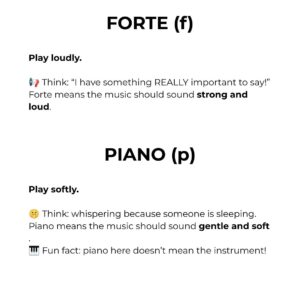
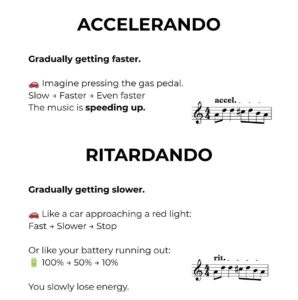
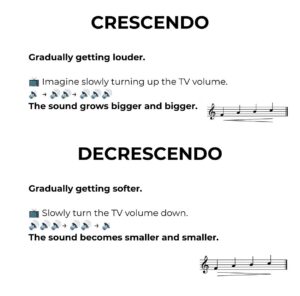
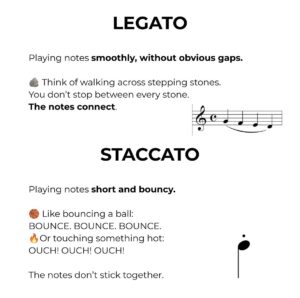
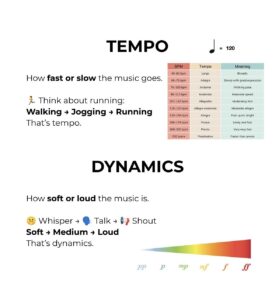
🎼 The Core Terms — All Italian
Words describing dynamics, tempo, and articulation are overwhelmingly Italian:
~piano, forte, mezzo, crescendo, diminuendo
~allegro, adagio, andante, presto
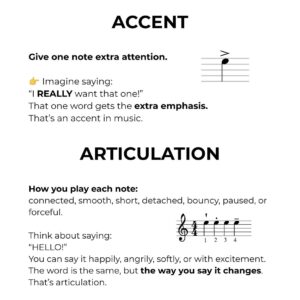
~legato, staccato, tenuto, marcato
These are 100% Italian in origin.
🎼 The Exceptions — Not Italian
A few terms come from other languages:
-French: tendu, porté, rubato (Italian root but used differently), enchaîné
-German: Lied, durchkomponiert, Schnell
-English: modern pedagogical terms like swing, pedal point, half-step, whole note
But the foundational vocabulary—the one every pianist must learn—is Italian.
If you’re thinking in terms of vocabulary, piano becomes a beautifully concrete “second language.” You’re not just learning how to play ~ you’re learning a lexicon that tells your hands how to move, your ear how to listen, and your body how to shape sound. Each term is a tiny instruction with a whole world inside it:
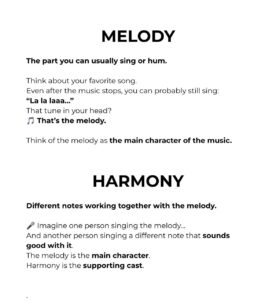
- Piano — soft, gentle, like speaking in a lowered voice
- Forte — strong, full-bodied, like opening a door with confidence
- Crescendo — growing, expanding, letting the sound bloom
- Diminuendo — tapering, softening, letting the phrase exhale
- Legato — connected, smooth, like brushstrokes that never lift
- Staccato — detached, crisp, like raindrops hitting stone
- Allegro — lively, bright, quick in spirit
- Andante — walking pace, steady and human
- Adagio — slow, spacious, like moving through candlelight
As you learn these words, you’re learning how to think in music. You begin to understand that “forte” isn’t just loud; it’s a kind of emotional posture. “Legato” isn’t just connected; it’s a way of breathing. The vocabulary becomes embodied, and that’s when the language of piano starts to feel fluent.
See if you can “hear” any of the above terms in Vivaldi’s 4 seasons below. Listen for loud vs soft, connected vs detached, growing or tapering, lively or slow.
Listen below: