~What is Sight Reading~
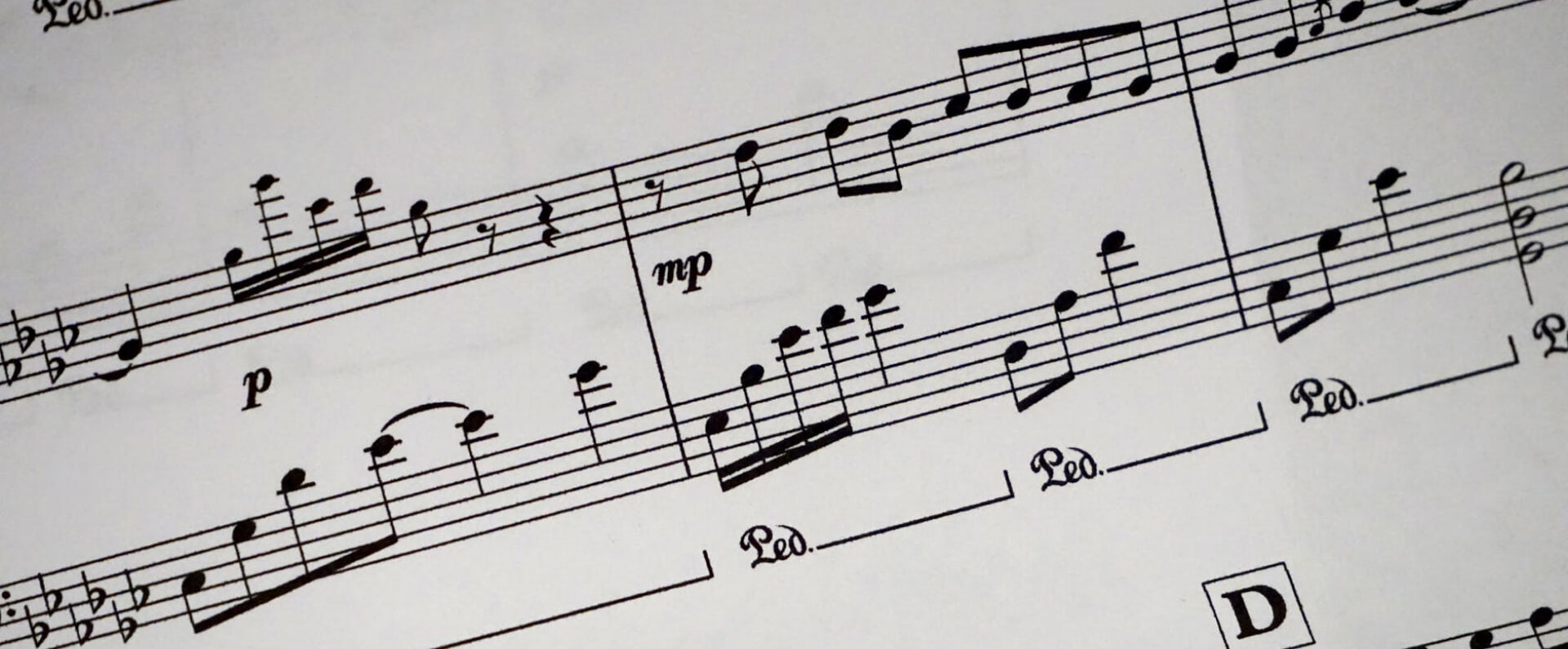
Sight reading on piano is the skill of playing music the first time you see it, in real time, without stopping, turning notation directly into sound as you move forward through the score. It’s not memorizing, practicing, or improvising. It’s reading fresh music and keeping a steady pulse even when you hit something unfamiliar.
Sight reading works because you train specific habits: focusing on rhythm first, recognizing intervals and patterns instead of single notes, keeping your eyes ahead of your hands, and continuing through mistakes rather than stopping to fix them. At its core, sight reading is musical fluency — the ability to decode and perform new music smoothly, confidently, and continuously.
At all levels, I have my students sight read at every lesson. Here’s why:
~Why Sight Read?~
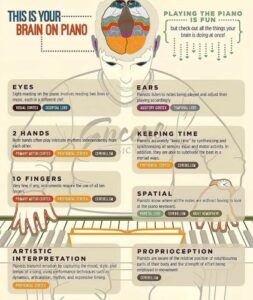
Sight reading is one of the fastest and most complex mental processes in the human being! Here is why we practice this important skill in class; and ongoing over time as we learn.
- Parallel Decoding!
- The eye must scan Treble & Bass Clef simultaneously processing not only individual notes, but also chords, intervals, and entire harmonic textures in fractions of a second. It is the cognitive equivalent of reading two different languages at the same time!!
- Working Memory!
- While the hands physically execute the current bar, the eyes are already reading one or two bars ahead. The brain must temporarily retain future information in working memory while coordinating present movement, without mixing both timelines.
- Predictve Processing!
- The student does not read note by note. The brain recognizes structural patterns (scales, arpeggios, cadences) and predicts what comes next based on internalized music theory. The nervous system fills in the gaps before the eye fully processes them.
- Neuromotor Translation!
- Visual information is instantly translated into spatial and pressure-based commands. The brain calculates exact distances on the keyboard without looking at the hands, using highly refined proprioception (spatial awareness of the body) to maintain visual contact with the score.
- Decision-making under pressure!
- If an unexpected leap or overwhelming density appears, the pianist must decide in milliseconds which notes to prioritize (such as bass or melody) to preserve the structure. Time is relentless and does not stop, demanding immediate adaptability.
- Instant Expressive Integration!
- It is not enough to press the correct keys. The brain must simultaneously process dynamics (force), articulation (attack duration) and phrasing, giving musical and emotional meaning to an abstract text it has never seen before.
Sight-reading at the piano is not just “Reading Music”. It is massive, real-time data processing that rivals the performance of the most powerful super-computers, requiring a level of cognitive, visual, and motor reaction speed that very few human disciplines can match!!
Sometimes, it’s fun to have listened to a piece before sight reading it for the first time. If you know how it sounds, it’s easier to predict what comes next. My professors would severely look down on me for doing this; I was trained to not “give out the answers”, everyone must read from scratch. But I personally think it’s important to engage auditory learning as well; and I have seen how it takes my students to the next levels in playing music.
Below is a list of 2-page wonders to listen to; one of these might turn up in your class to play next! So study well! Listen while you read or work or drive. You never know when I might pull one of these out for you to “sight read”.