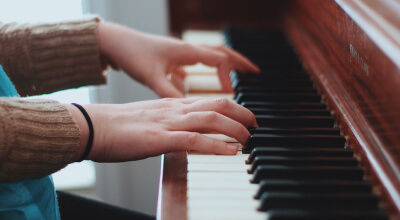
In the old days, we called memorization “playing by heart” and I never really thought about what that means exactly until now.
Playing music by heart means memorizing a piece so deeply that you can perform it without sheet music, relying on your memory, ear, and emotional connection. It’s about freeing yourself from the page so you can focus on expression and flow.
🌟 Benefits of Playing by Heart
- Freedom of expression: You can focus on emotion and interpretation rather than reading notes.
- Fluidity and confidence: Anticipating the music reduces hesitation and mistakes.
- Deeper connection: You embody the piece, making performance more authentic and engaging.
How exactly do we go about learning how to memorize so we can play by heart?
🎶 Key Techniques for Playing Music by Heart
- Use multiple types of memory:
- Visual memory: Recall how the notes look on the page.
- Auditory memory: Hear the melody internally and anticipate intervals.
- Gestural memory: Train your fingers and body to remember movements. (I call this “gross motor memory, or kinetic thinking”)
- Analytical memory: Understand the harmonic and rhythmic structure. I do this with my advanced students.
- Break the piece into sections:
- Identify phrases, modulations, and recurring motifs.
- Practice each section separately, then link them together.
- Practice hands separately:
- Right hand for melody, left hand for rhythm.
- Combine only after each hand feels secure.
- Repetition with awareness:
- Don’t just play through—focus on fingerings, dynamics, and phrasing.
- Repeat until movements feel natural and automatic.
- Sing or hum the piece:
- Internalize the sound so you can anticipate what comes next.
- This strengthens auditory memory and helps with flow.
- My sister and I used to do this in the car when my mom would pick us up from school, we would all sing our parts from band practice, if you can imagine what she went through while driving…. haha! But it works!!
- Test yourself away from the instrument:
- Visualize the score or fingerings in your mind.
- Try “mental practice” to reinforce memory without playing.
⚠️ Challenges
- Memory lapses: Can be stressful, but practicing recovery strategies (like jumping to the next section; or going back to where you remember) helps.
- Time investment: Memorization requires patience and consistent practice.
🎼 Practical Example
Suppose you’re learning Beethoven’s Für Elise:
- Memorize the opening motif (E–D#–E–D#–E–B–D–C–A).
- Practice right-hand melody until automatic.
- Add left-hand arpeggios separately.
- Understand the harmonic shifts (A minor → C major → G major).
- Link sections gradually until the whole piece flows.(**I work on all of these practical tips above with the kids in their lessons**)
If you think memorizing piano is difficult, wait till you hear about this guy! Two summers ago, I had the opportunity to witness Detroit Symphony Orchestra principal conductor at Grand Teton Music Festival and he conducted the entire musical experience “by heart”. I was in shock! To be able to memorize all the instruments and their parts and when they come in and go out, it’s intense! How does he do it?!
Jader Bignamini, the Italian conductor who leads the DSO, is admired for his passionate energy and deep connection to the music he interprets. He often works with full scores committed to memory, allowing him to lead without the barrier of a book between himself and the musicians. Memorizing a score is not just about recall—it’s about internalizing every voice, rhythm, and harmonic shift so that the conductor can breathe with the orchestra and respond in the moment. For Bignamini, this mastery transforms rehearsals and performances into living conversations, where his gestures embody the music’s architecture and emotional arc.
He talks about how he does it here in this podcast, memorizing up to 60 pages per day!!! Fast Forward to 27:05 the interview starts and at 37:00 he talks about exactly how he accomplishes this amazing feat. “The conductor’s job is to not get in the way.”