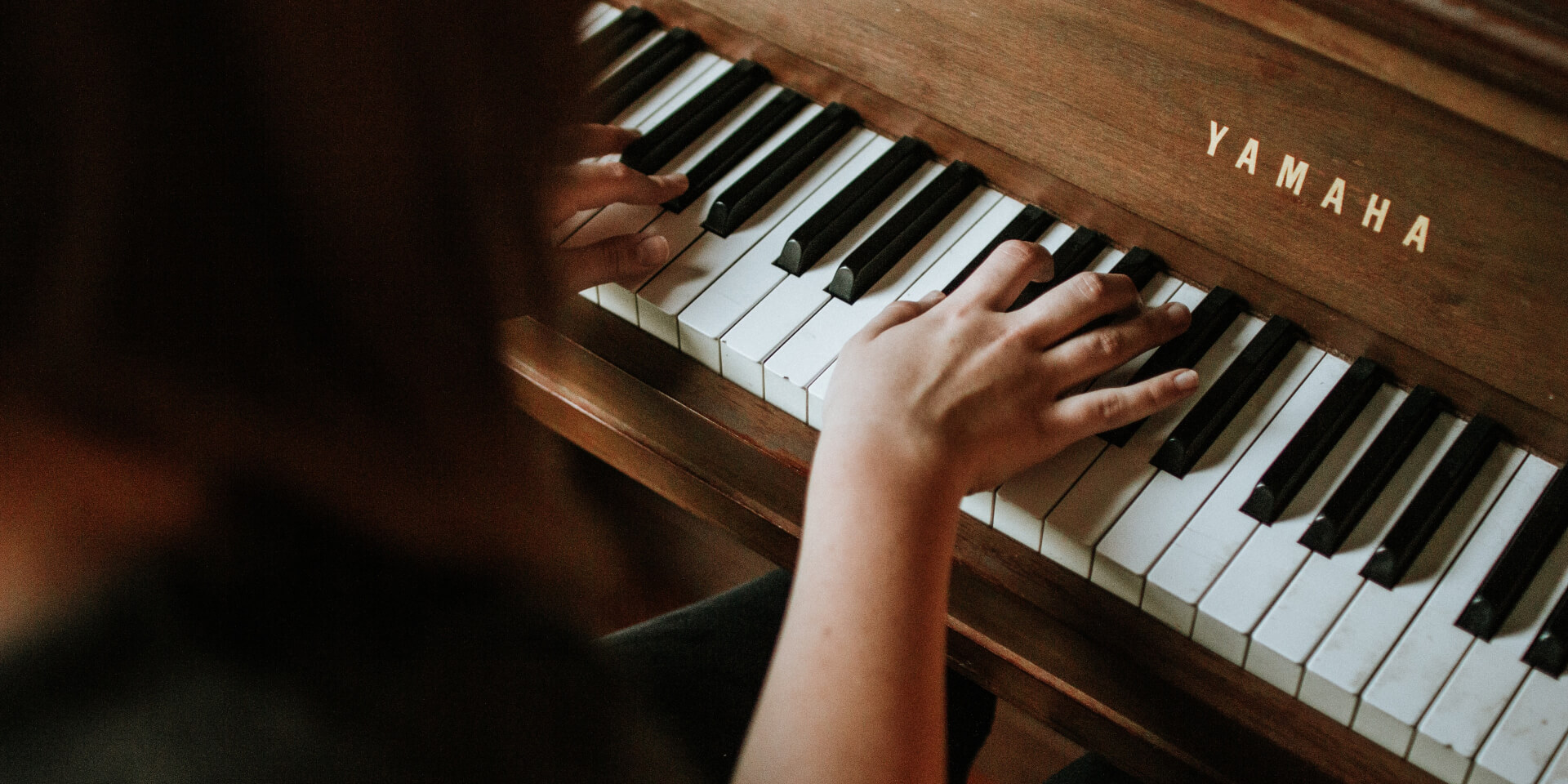
~How to Practice Piano~
🎹 Practicing piano effectively is all about structure, intention, and a dash of creativity. Here’s a beginner-friendly routine that balances technique, musicality, and fun:
🧘 Step 1: Warm-Up (5–10minutes)
- Finger exercises: Try five-finger scales in C, G, A, and F positions.
- Scales and arpeggios: Start with major scales, then add arpeggios to build dexterity.
- For younger students, practice your finger wiggles!
- Relaxation: Check your posture, breathe, and keep your shoulders loose.
🎼 Step 2: Technique Practice (10–15 minutes)
- For Younger students, practice your technique book!
- Hand independence: Practice simple patterns with each hand separately, then together.
- Chord progressions: Play triads (C, G, F, A) and experiment with inversions.
- Rhythm drills: Use a metronome to stay steady and improve timing.
🎵 Step 3: Repertoire Practice (15–20 minutes)
- Choose 2–3 songs: Work on small sections, especially tricky parts.
- Slow it down: Play at half speed to focus on accuracy.
- Add expression: Experiment with dynamics, tempo, and pedal use.
🎤 Step 4: Creative Play (5–10 minutes)
- Improvise: Use the keys under your fingers to create melodies.
- Sing along: If you’re comfortable, add vocals to your playing by humming or singing.
- Explore styles: For older students, try jazzing up a song or switching genres.
📅Bonus Tips
- Practice daily
- Older students: even if just for 20–30 minutes.
- Younger students: try just 5-10 minutes every day
- Youngest students: even practicing one of the above for just a moment each day works!
- Record yourself to track progress and spot areas to improve.
- Listen to the songs you’re learning to internalize their feel (see the playlist button down below).
Most of all, HAVE FUN!! You are learning something exciting and new.

Piano is a Lifestyle.
I grew up listening to classical pieces, and later ended up learning to play them.
Part of piano education is listening to how the songs go up or down and how far apart the intervals (skips) are.
In the words of a friend who took lessons for the first time as an adult:
“I have numbers flying out of my ears!!”
Click media below
for easy listening
Kids can listen while driving, while cleaning, while studying, while bored. Anytime. This is called ear training. As always, skip the ones that aren’t interesting.